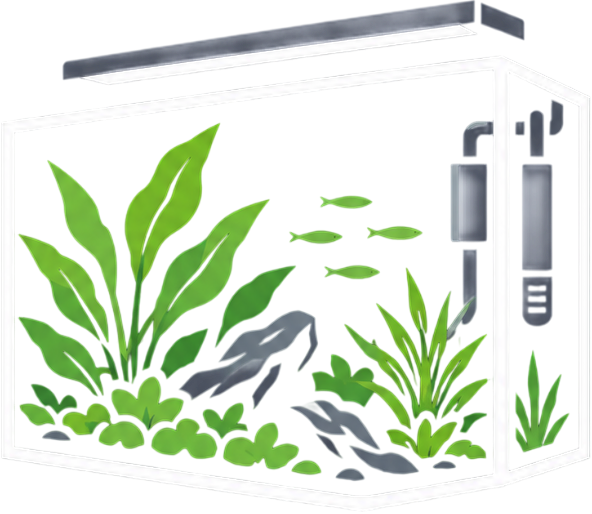

Aquarium CO2 Diffuser Comparison - Which Type Is Right for Your Tank
If you are running a pressurized CO2 system on a planted aquarium, the diffuser is the part that decides whether all that gas actually reaches your plants or just bubbles out through the surface and off into the room. A good diffuser breaks CO2 into tiny bubbles or a fine mist and holds it in the water column long enough to dissolve, which is what lets your plants pearl and grow instead of your gas cylinder emptying for nothing. A poor one wastes gas, clouds the glass with algae, or cannot keep up once your tank passes a certain size.
There are five diffuser designs you will run into again and again: glass bubble-counters, ceramic discs, inline atomizers, external reactors and DIY ladder diffusers. Below is a full comparison of how they work, what they cost to buy and run, and which tanks they suit best.
How a CO2 diffuser actually works
Every diffuser design solves the same problem: CO2 gas wants to rise straight to the surface and escape. The smaller the bubble or mist droplet, and the longer it stays in the water, the more gas dissolves before it gets away. Diffusers manage this one of two ways: by breaking the gas into fine bubbles at the point it enters the tank, using a porous ceramic, sintered glass, or micro-mesh surface, or by forcing the gas through the filter's water flow, either inline in the tubing or inside a chamber, so turbulence and pressure do the dissolving instead of bubble size alone.
Flow rate, tank height and surface agitation affect efficiency too. A diffuser placed low in a tall tank gives bubbles more time to dissolve than one in a shallow tank, and strong surface ripple from a filter outlet will off-gas CO2 faster than it dissolves.
Comparison at a glance
| Diffuser type | Bubble/mist size | CO2 efficiency | Noise | Maintenance | Typical cost | Best tank size |
|---|---|---|---|---|---|---|
| Glass bubble-counter | Medium-fine | Moderate | Silent | Low-medium (algae on disc) | $15-40 | Up to ~40 gal / 150 L |
| Ceramic disc | Fine | Good-high | Silent | Medium (disc needs cleaning) | $10-30 | Up to ~60 gal / 225 L |
| Inline atomizer | Very fine (mist) | Very high | Silent | Low (self-cleaning in flow) | $25-60 | Any size with a canister filter |
| External reactor | N/A (fully dissolved) | Highest | Very quiet hum | Low | $40-120 | 40+ gal / 150+ L, high-tech setups |
| DIY ladder | Coarse | Low-moderate | Silent | Low | Under $10 | Nano to small tanks (under 20 gal) |
Glass bubble-counter diffuser
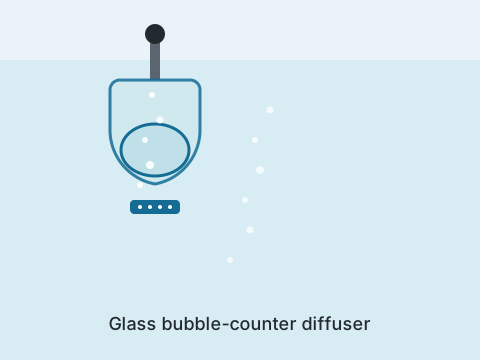
This is the classic planted-tank diffuser: a glass bulb with a ceramic disc sealed into the base, suction-cupped inside the tank. CO2 enters the bulb, collects, and pushes through the ceramic pores as a steady stream of small bubbles that drift upward through the plants.
Properties
- Sits inside the display tank, so it is visible and part of the aquascape.
- Built-in counting chamber makes it easy to dial in bubbles per second.
- Ceramic disc needs periodic cleaning (bleach dip or scrubbing) as it clogs with biofilm.
- Works with any pressurized regulator and standard tubing.
- Widely available and inexpensive, making it the easiest entry point for a first CO2 setup.
The main downside is placement: it has to go somewhere in the tank, and a clogged disc makes bubbles larger and noisier over time rather than failing outright, so it is easy to miss.
Ceramic disc diffuser
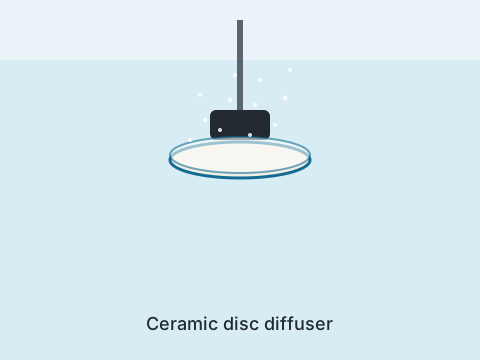
A step up from the glass bubble-counter in raw diffusion quality, this is just the ceramic element on its own, in a small plastic or brass housing, mounted low so bubbles have maximum distance to dissolve before reaching the surface.
Properties
- Larger, flatter ceramic surface than a glass diffuser produces a finer, more even mist.
- No counting chamber, so you count bubbles in the tubing or judge output by the mist cloud.
- Best placed near the substrate, ideally under an outlet or powerhead so mist gets pulled through the water column instead of drifting straight up.
- Ceramic still clogs and needs the same cleaning routine as any porous diffuser.
- Slightly cheaper than glass bubble-counters since there is less glasswork involved.
Because the disc is wider, it produces finer bubbles than a small glass unit at the same flow rate, which translates to better dissolution per bubble of CO2 used.
Inline atomizer diffuser
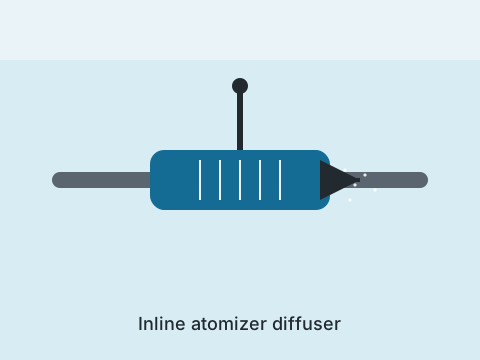
Instead of sitting in the tank, an inline atomizer is spliced into a canister filter's outlet hose. CO2 is injected before a fine mesh, and the filter's own flow shreds it into a mist that is invisible by the time it reaches the aquarium.
Properties
- Requires a canister or sump-style filter with enough flow and hose diameter to accept it.
- Produces one of the finest, most consistent mists available, since flow pressure does the diffusing work rather than bubble buoyancy.
- Nothing visible inside the display tank, which matters for aquascapers.
- Largely self-cleaning thanks to constant filtered flow, though check periodically for mineral buildup.
- Higher upfront cost, and installation means cutting into filter tubing.
This is the go-to choice for high-tech planted tanks where both plant health and aesthetics matter, since gas is fully broken up before it is even visible in the water.
External CO2 reactor
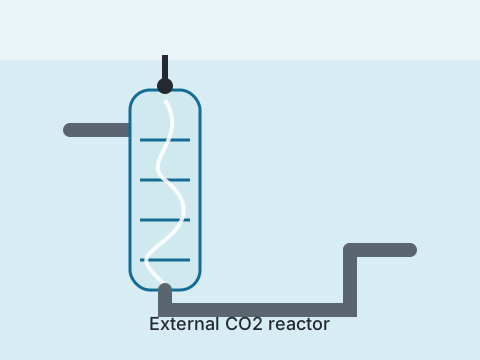
A reactor takes the inline concept further: water and CO2 are pushed together through a sealed chamber of baffles or media, forcing contact until essentially all the gas dissolves before the water exits back into the aquarium.
Properties
- Typically the most efficient method of all, often approaching full dissolution with minimal gas loss to the surface.
- Larger footprint, usually mounted outside the tank near the filter, in a cabinet or sump.
- Needs a filter or dedicated pump with enough flow to push water through the chamber.
- Low ongoing maintenance, though check occasionally for trapped gas pockets or debris.
- The highest cost of the group, and overkill for smaller or low-tech tanks.
Reactors make the most sense on larger tanks, tanks with high plant mass, or setups where every bit of gas efficiency matters because refills are inconvenient or expensive.
DIY ladder diffuser
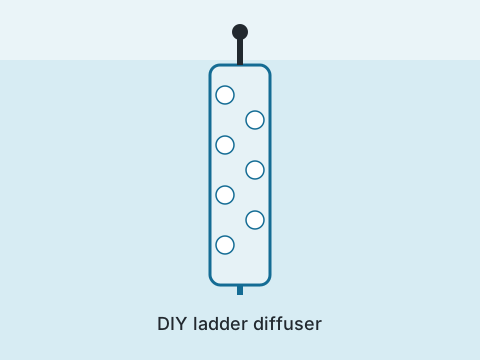
The simplest and cheapest option, usually a length of clear tubing bent into a zigzag "ladder." CO2 enters at the top, gets trapped in pockets as it works down the steps, and slowly dissolves before the leftover gas exits at the bottom.
Properties
- Can be built for next to nothing from tubing and a few fittings, or bought pre-made cheaply.
- Bubbles are coarser than ceramic or atomizer methods, so efficiency is the lowest of the group.
- No porous element to clog, so there is nothing to scrub or replace.
- Takes up more visual space than a compact diffuser and needs enough tank height to work.
- Fine for nano and small tanks with low CO2 demand, but struggles as plant mass or volume grows.
It is a good option while testing whether a planted tank is worth committing to, or as a backup diffuser to keep in the cupboard.
Choosing the right diffuser for your tank
A few practical factors should drive the decision more than brand preference:
- Tank size and CO2 demand. Nano and small tanks can get away with a DIY ladder or small glass diffuser. Medium tanks do well with a ceramic disc or glass bubble-counter. Larger or high-tech tanks benefit from an inline atomizer or reactor, since these scale with filter flow rather than bubble size alone.
- Filter type. Atomizers and reactors need a canister filter or dedicated pump with enough flow; on a hang-on-back or sponge filter, an in-tank glass or ceramic diffuser is more practical.
- Aesthetics. An inline atomizer is the only option here that stays completely out of view.
- Maintenance tolerance. Ceramic-based diffusers need regular cleaning; inline and reactor setups stay cleaner on their own thanks to constant water flow.
- Budget. A DIY ladder or basic glass diffuser is cheapest up front; reactors and atomizers cost more but pay it back in gas efficiency, especially in larger tanks.
Maintenance tips that apply to every type
- Clean ceramic or porous elements with a soft brush or a brief diluted-bleach soak, then rinse and dechlorinate thoroughly, to keep bubble size fine and consistent.
- Check tubing and fittings for kinks or leaks, since a slow leak can drain a pressurized cylinder over days with no visible sign in the tank.
- Position any in-tank diffuser low, ideally under a filter outlet or powerhead, so bubbles or mist get pulled through the water column instead of rising straight to the surface.
- Raise CO2 gradually over several days when adjusting bubble rate, and watch fish and shrimp for stress, since more efficient methods raise dissolved CO2 faster at the same bubble count.
Final thoughts
There is no single best CO2 diffuser, only the best one for a given tank. Glass bubble-counters and ceramic discs are the reliable, affordable default for most planted tanks. Inline atomizers and external reactors earn their higher price on larger or high-tech setups where efficiency and a clean aquascape matter most. DIY ladder diffusers remain a fine budget option for small tanks or anyone still deciding whether pressurized CO2 is worth it. Match the diffuser to your tank size, filter, and maintenance tolerance, and the rest of your CO2 setup gets far easier to dial in.